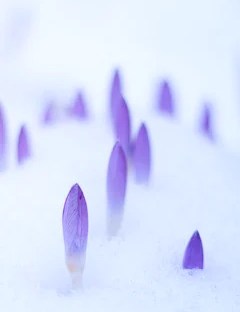
The spring melt here in southern Saskatchewan came finally despite a ridiculously huge and much resented snowstorm on April 20. Along the highway north of our city, water filled roadside ditches and spread across fields, turning farmhouses into “lakeside property.” At last, the sky rang with the calls of flocks of geese. Outdoors, people walked smiling in sunshine, comfortable in light jackets and sandals after the cold, snowy months of winter.
But a long day’s drive to the west, in the Canadian Rockies, some folks found their smiles where snow still covered the upper slopes. They were drawn to the delights of spring skiing. Although more than three decades have passed since I rode a lift up into spring snow, I remember vividly the colours – cobalt skies, bright white snow, vivid green conifers – and the smell of warming treesap. In the soft, warm air, one could ski comfortably in t-shirt and jeans, with mitts, toque, scarf, and coat stuffed into a backpack. Or, like my friend Martin, you could just wear shorts, even though (back in the pre-sunscreen 80s) you risked serious sunburn in addition to scraping yourself up if you took a hard fall. The pleasures of a spring ski were an intense hit to the senses.
One very fine spring day in the late 70s, my older brother, Gerry, and his partner, Leslie, invited me (then in my mid-teens) to join them and a couple of their friends for some skiing at Lake Louise. My skill level was nowhere near the abilities of these locals, who worked at the ski hill and lived in Lake Louise, but I expected a fun day with lots of laughter. We chose to take the t-bar up the steep face of Whitehorn mountain to its south-facing Summit. I would follow an easier run while they skied a more challenging line, meeting again at the bottom of the lift.
I set off along the top flats, happily taking gentle turns over the soft snow. The sunshine pulsed warm on my shoulders out of a bright blue sky. I thought about my technique, easing into a pleasing and relaxed sense of flow, joyfully aware of the striking view across the Bow Valley to the snowy peaks stretching along the top of the Continental Divide.
Then, right there from that carefree and happy space, my skis caught an edge in the spring snow, catapulted me off balance, and flopped me forward onto my belly. In an instant, I transitioned from feeling very, very cool to being thrown onto the snowpack by a beginner’s mistake. I rolled my eyes and shook my head at myself, grateful that there were no other skiers nearby to see me in my embarrassment. Ridiculous but resigned, I bellyslid headfirst over the snow, waiting to come to a stop, skis dragging behind me on the smooth slope.
But, as my chest and arms chugged to a stop, a strange thing happened. With the momentum of the final jolt, my relaxed legs flopped downhill over the pivot of my bent knees. The back ends of my skiis dug deeply into the snow on either side of my head, just ahead of my ears. Contorted, I lay pinned inconceivably into a curlicue.
With startled frustration and wide-eyed disbelief, I rotated my chin over the snowpack to examine the situation. My forearms were free, but it was difficult to lift or to move my shoulders at all. I grabbed first one and then the other ski, grunting with exertion. The skis would not shift out of the snow. Perhaps I could release my ski boots from the bindings that kept them attached to the skis? My hands, fumbling with the mechanism, couldn’t generate the push needed to release the bindings.
Panting, with my chest and face pressed into the snow, out of the corner of my eye I noticed Leslie on a distant, adjacent slope. “Leslie!” I tried for some volume out of my compressed diaphragm. “Leslie!” She skied out of sight, too far away to hear my little bleating. Well then. Neither my family nor my friends would be along to help me. In the beautiful spring sunshine, despite all my struggles to extract myself, there was nothing more I could do. I lay down my head and waited.
Minutes passed. Then, from uphill, came sounds of skis over snow. I lifted my head, trying to look over my shoulder, and called for help. Within moments, I was explaining my absurd circumstances to the helpful, smiling skier who had stopped next to me. He easily lifted my boards up out of the snow, made sure I was alright, and waved as he carried on down the hill. Groaning, I rolled over, able at last to straighten out my aching body and rest on the snow before standing up. What relief. A happy ending.
Recently, scrolling through BBC’s online news, I came across the story of a skier whose happy ski day took a turn much more dramatic and life-threatening than mine. Snow boarding through the powder on Washington State’s Mt. Baker, this person fell and was thrown unexpectedly, up-side down into a deep tree well. Just around the tree trunk, the thick branches of a tall conifer had created a space with less snow than the surrounding area. The snowboarder slipped headfirst into this narrow space, held suspended beneath where his boots bound him unrelentingly to his board. Loose snow piled down around him, covering his face. There was nothing he could do, not even move his arms enough to push away the snow.
And then, in that huge, silent terrain, a stranger skied directly over the red, upended snowboard laying on the snow surface, almost hidden by the tree branches.
The stranger stopped, looked uphill to the board, and understood immediately what had happened. He knew that the snowboarder may already be running out of air, and jumped into action – all of which is caught on the rescuer’s Go-Pro posted to YouTube*. Breathing hard, he struggles to clamber uphill through the bottomless snow. Removing his skis, he uses them as planks to support himself as he hauls himself back up to the snowboarder. Then he aims through the snow towards where he expects to find a face, wrestling the snow away with his own arms. “I’m coming,” he pants. “Hold on.” He lunges again into the enveloping snow. “Are you alright? Can you hear me?”
And then we see an arm, and, finally, a set of goggles. The rescuer reaches down, pulling the suffocating snow away from the trapped man’s mouth. “You’re good. I gotcha. Can you breathe?” the rescuer asks, and the snow-boarder, who a minute before had thought himself doomed, was able to answer that, yes, he can breathe. Watching, we feel the intense relief and the emotion. He is okay. He relaxes, assured that a rescuer is coming for him to dig him out. He will be able to get up out of the snow and move on into the rest of his day, the rest of his life.
In our little church of St. Aidan, during what is known as Holy Week and building to Easter, we were given space to think deeply and prayerfully about these things – about when life goes suddenly, badly wrong. We were invited to enter imaginatively into the retelling of the Christ story, the well-known narrative describing what happened to Jesus all those years ago.
I needed to hear that story again this spring. I needed to hear it because there are too many situations, in my life and in the lives of people who I love, where the narrative that was ticking along nicely spun abruptly into a maelstrom from which no exertion could free them. Considering the options, it all looks hopeless. Curlicued into absurd situations, we can barely move. Are we the only ones who feel so caught by painful, frightening circumstances. What can we do?
The Holy Week story, in addition to chronicling Jesus’ experience, also describes the loss and the shock and the despair of Jesus’ friends, his family, and his mom, when he was brutally and (from their perspective) impossibly killed. They, too, were caught. I wonder whether they, from their limited human sight lines, had begun to hope that, with Jesus beside them, they might avoid great pain altogether. Perhaps theirs would be small-scale disasters – ones after which they could dig out, get up, and carry on as before. Instead, like the earth itself that Friday, the lives and imaginations of these ones who loved and leaned on Jesus were shaken to the core. What hope could the future hold?
Into that situation, that space in time where they were inconceivably pinned, came suddenly something for which they would never have dared to hope – a resurrection that changed everything. Who could have thought that the one beaten and pegged to that cross would also become the rescuer? Who could have thought that the rescuer carried in his body and very self the scars and memory of his constrained human agony? As beloved American poet, Luci Shaw, writes, he was “…nailed to my poor planet, caught that I might be free…”. That I might be free.
So within this community at Easter, as in numberless other communities around the world, we recite the Christ story. We “practice resurrection”, standing shoulder to shoulder with others who also need to remember. In the depths of our own bodies we recognize and hold space for our own pain and the pain of family, friends, strangers near and far. From that true place, we then lean into the emotive song of hope for a promised future. So we sing in the electric air of our risen Rescuer: “Let his church with gladness hymns of triumph sing, for the Lord now liveth; death hath lost its sting.”
In the context of this resurrection story, I just might be able to rest, despite everything, because I know, big picture, who is coming for all the hurting, grieving people I love. He is coming for me. We will be okay.
*You can watch this amazing rescue (as I did, with tears in my eyes) here on YouTube. https://youtu.be/m5ME9Swo0_8. (Language alert)

 Darlene Pinter
Very timely to read your narrative . We need these reminders often. Thank you. 🙏🌹
Thank you, Dolores.
Sent from my iPhone
<
div dir=”ltr”>
<
blockquote type=”cite”>
Thank you, Darlene. Once again, your words have spoken encouragement to my heart and reminded me that our earthly story is not yet finished! Be blessed as you have blessed me.
Thank you Marvel. So good to hear from you.
Thank you, Darlene. Those are such great stories beautifully woven together with the gospel!
Love you, Michelle
Thank you, Michelle.
Beautiful post. “I know, big picture, who is coming for all the hurting, grieving people I love. He is coming for me. We will be okay.” Amen and amen.
Thank you Linda.
Tbanks, Darlene.
As always, I delighted in your essay. When life goes terribly wrong, I’ll remember your ski tumble.
s always, a delightful read.
When life goes terribly wrong–so far it has’nt 0– I ill be encouraged by you ski tumble recovering.
Bruce
Thank you, Bruce. I so appreciate you.
Such a well written story! You can tell your words come from your heart! ❤️
I read this again today….May we always remember the context and live as our Fathers children with grace and love. D
Thanks Dolores.